



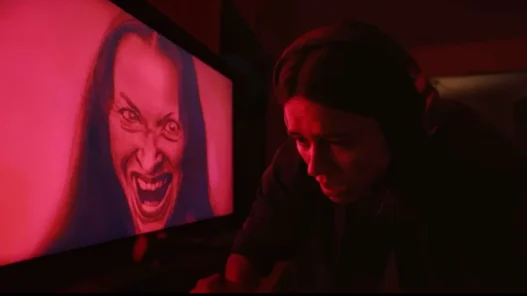
Undertone doesn’t rely on visuals to scare you. It builds everything around sound, and that’s exactly what makes it work. From early on, it’s clear this isn’t a film interested in jump scares or obvious horror beats. Instead, it leans into audio in a really clever way, using it to create moments of genuine unease.
The sound design is where the film really shines. Small noises, shifts in tone, things you’re not quite sure you heard properly. It plays with your attention, making you listen more closely than you normally would. There are moments where the tension comes purely from what you can hear, not what you can see, and that’s where the film is at its strongest. It creates those subtle scares that creep up on you rather than hit you all at once.
The pacing is slow, but it feels intentional. The film takes its time to let those audio moments land, giving space for the atmosphere to build. It’s the kind of horror that rewards patience. You’re not being pushed from one scare to the next, you’re being pulled into a mood and left to sit in it.
Visually, everything is fairly restrained, which actually helps the concept. By not overloading the screen, it keeps your focus on the sound, which is clearly where the real storytelling is happening. It’s a smart choice, and one that keeps the film feeling consistent in its approach.
Undertone is a great example of how powerful sound can be in horror when it’s used properly. It’s subtle, clever, and genuinely unsettling in places. Not one for those looking for fast-paced scares, but if you appreciate horror that plays with your senses, this one does it really well.

I grew up in the Blockbuster Video days, when picking a film meant judging the cover and hoping for the best. I’m not a critic by trade — I just call it how I see it, whether a film smashes it or falls flat on its face.