



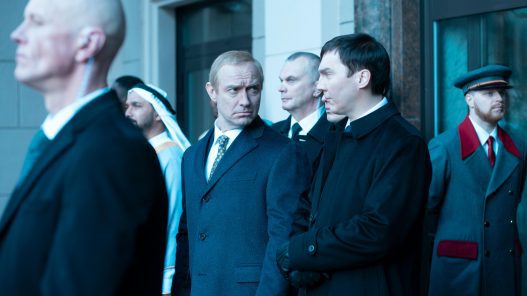
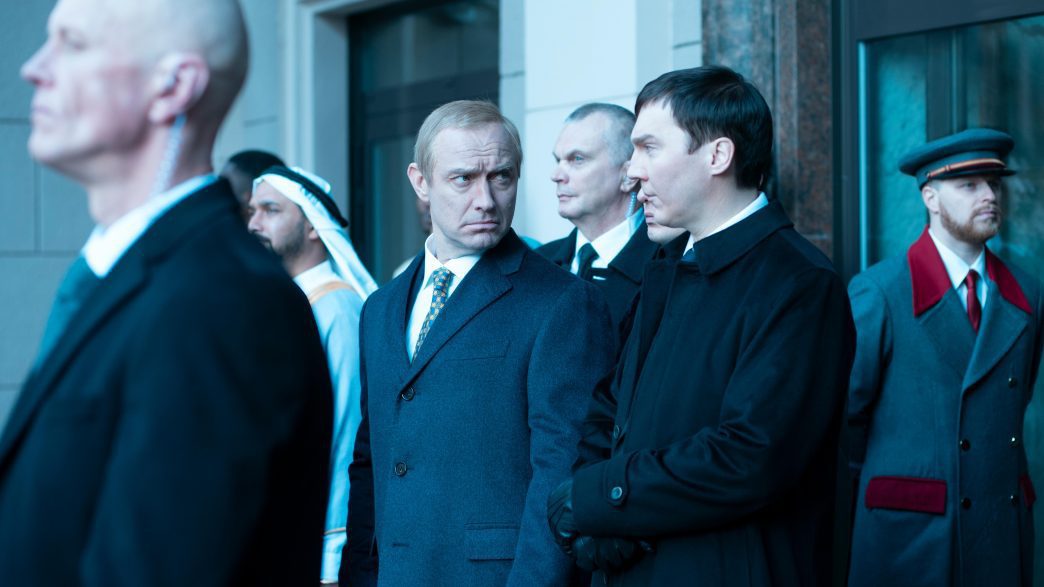
The Wizard of the Kremlin is one of those films that has a lot going for it on paper, but doesn’t always hold your attention in practice. At 2 hours and 16 minutes, it feels longer than it probably needed to be. There’s a lot of information in there, and while some of it is genuinely interesting, the pacing doesn’t always keep you engaged.
From a performance point of view, Paul Dano stands out. Whatever anyone says, the guy can act, and he brings a level of depth and control to his role that helps anchor the film. Jude Law also delivers a solid performance, but I couldn’t quite get past his portrayal of Vladimir Putin.
There were moments where, vocally, it didn’t quite line up with what you’d expect from that character. At times I’d glance at my phone, hear him speak, and it would pull me out of the scene slightly because the voice didn’t match the image. It wasn’t anything to do with how he performed the role, more just how his natural voice came through. That said, everything else about his portrayal was strong. The mannerisms, the look, the presence all felt spot on. It’s just the lack of a Russian accent, not only from him but from others as well, that stopped it from being a great portrayal for me.
Where the film does work is in its subject matter. If you’re into history and political backstories, there’s a lot to take from it. It gives insight into a world that isn’t always explored in this way, and there are moments where you can appreciate the detail and effort that’s gone into building that narrative.
That said, I did find my attention drifting at times. And for me, that’s always the test. If I’m reaching for my phone to check notifications, the film’s lost me a bit. It’s not that it’s bad, it just doesn’t keep a consistent grip.
Summary
The Wizard of the Kremlin is informative and well-acted in parts, but it struggles with pacing and engagement. There’s a good film in there, it just feels stretched out. Worth a watch if you’re into the subject matter, but be prepared for a slower ride.

I grew up in the Blockbuster Video days, when picking a film meant judging the cover and hoping for the best. I’m not a critic by trade — I just call it how I see it, whether a film smashes it or falls flat on its face.