









Roofman will steal your heart, make you laugh, and then awkwardly make you cheer for a man who’s broken at least 97 laws — dad energy has never been so criminal.
Based on the true story of Jeffery Manchester, Roofman follows a man whose criminal life is never what it seems: messy, illegal and improbably tender. At its core it’s a story about doing everything — right and wrong — to provide for the people you love. Think heists with heart, and a lot of moral squinting.
Channing Tatum is the film’s magnetic centre — equal parts heartthrob dad and top-tier crook. He’s so charming you’ll forget every statute he’s trampled on.
Kirsten Dunst, back on the big screen, is terrific — she nails that righteous, small-town moral compass while managing to be hilarious and unsettling in equal measure and also giving church girls a bad name.
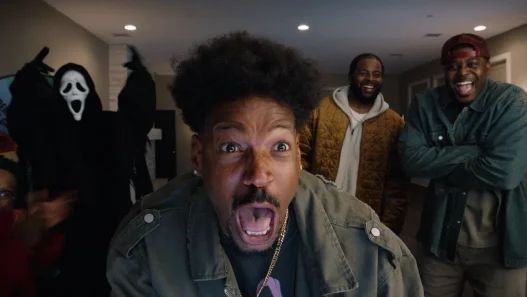
Lakeith Stanfield is, as ever, effortlessly cool — his every scene is smooth and quietly electric.
Ben Mendelsohn as a singing pastor? Wild casting choice that absolutely works — watching him deliver those moments is unexpectedly delightful.
Peter Dinklage chews scenery beautifully as the insufferable toy-store boss — a comic villain you love to hate.
It’s a uniformly strong ensemble: everyone puts in the graft and gives the film real emotional weight.
The movie’s craft is all about balance. Cinematography leans warm and intimate for family beats, then tight and nimble during the heist moments — the result is a surprisingly cozy criminal movie. Editing keeps the pace brisk without short-changing the quieter, tender scenes helping the film lean into comedy when it needs to and tug at the heartstrings when it counts. There’s no flashy VFX wizardry here — the production values are quietly confident, the kind that let performances breathe.
What makes Roofman sing is its tonal tightrope. On paper it’s weird: a career criminal who’s, by all accounts, the nicest robber ever. Those police reports describing Jeffery Manchester as disturbingly pleasant during his stick-ups are not only hilarious, they do a lot of the heavy lifting for the movie’s moral questions. The film asks, repeatedly and cleverly: if a man steals to give his daughter a better life, how black-and-white is “bad” anyway?
The screenplay leans into comedy to soften the darker facts of what Manchester achieves, and that comedic spin makes the whole thing oddly endearing rather than glorifying wrongdoing. There’s real heart here — you feel the love, the greed, the shame and the hope. The emotional beats land because the cast believes in them; Channing’s performance keeps you rooted in empathy even when you know you shouldn’t be rooting for a criminal. Because it’s based on a true story, every moment carries extra weight: the laughs often come with a sting.
Is the subject matter dark? Definitely. Is the film frivolous about it? Not remotely. The humor helps you across creaky ethical terrain, and the result is a moving, funny, and humane movie about family, ambition, and messy redemption.

Your go to for all things film, tv, gaming, pop culture! Can I be your movie guy?


