


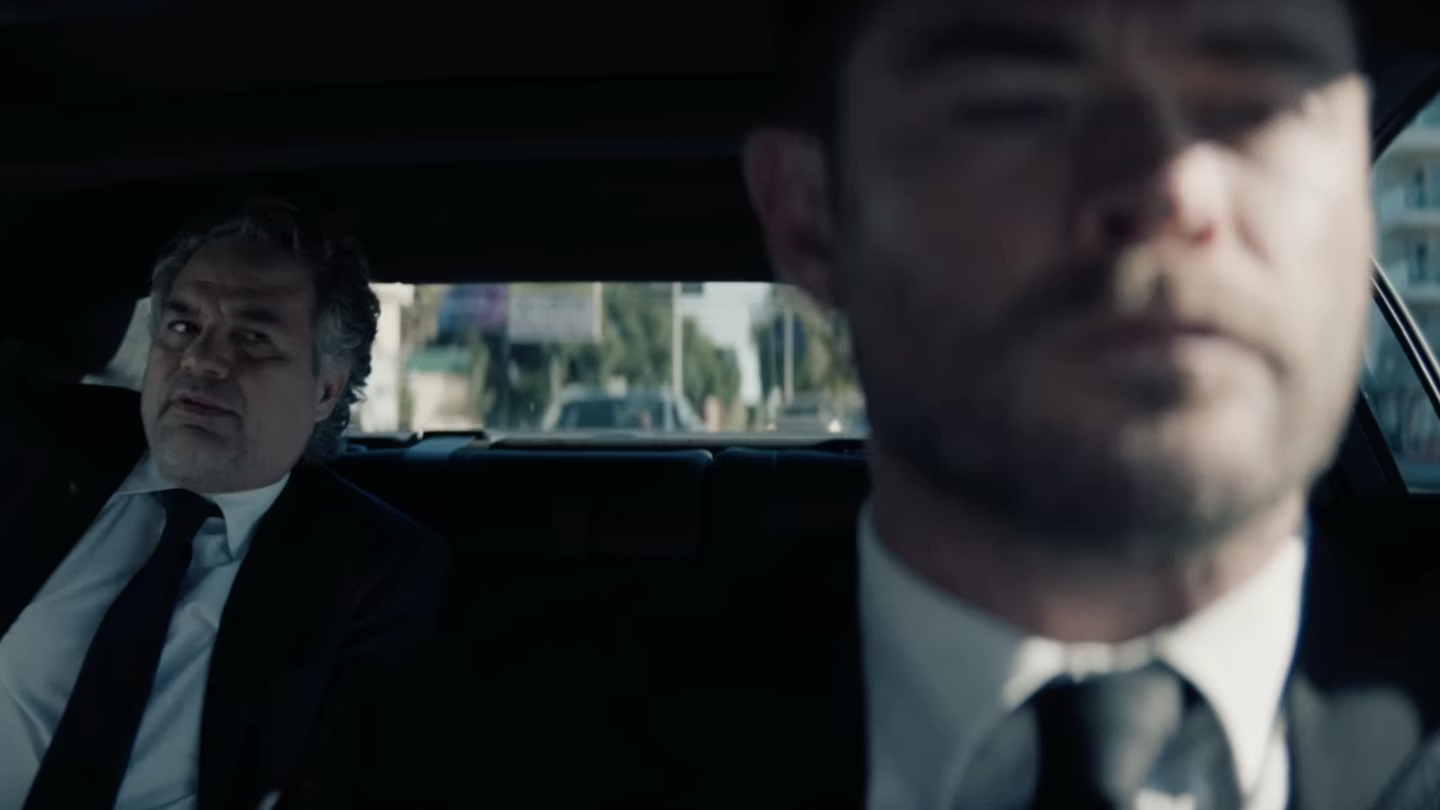
If Heat and The Town had a love child raised by Michael Mann, you’d get Crime 101 and yes, it’s that good.
Crime 101 follows three intersecting lives in a high-stakes crime thriller: Mike, a foster care survivor turned master thief with a dangerous edge; Lou, a detective slowly uncovering corruption within his own department; and Sharon, a seasoned professional fighting against corporate ageism while caught in the crossfire. As their paths collide during an elaborate heist, secrets unravel and loyalties are tested in this pulse-pounding thriller that proves crime doesn’t discriminate—it just gets complicated.
The film’s greatest strength lies in its layered characters brought to life by powerhouse performances. Chris Hemsworth sheds his usual charm to deliver Mike, a calculated and awkward robber whose mysterious past shaped by foster care abuse informs every twitchy movement and cold calculation. Hemsworth plays dangerous beautifully here, making Mike both sympathetic and unsettling.
Mark Ruffalo’s Lou is a detective caught in a moral crisis, discovering the very institution he serves is riddled with corruption whilst processing a failed marriage. Ruffalo brings his signature vulnerability and quiet intensity, making Lou’s internal struggle feel genuine and raw. You feel every moment of his world crumbling.
Halle Berry reminds everyone why she’s a legend as Sharon, a stunning career woman systematically blocked from advancement because of her age. Berry infuses Sharon with fierce determination and barely contained frustration, creating a character who refuses to be sidelined. She’s magnetic in every frame.
What makes these performances sing is how naturally the three storylines intertwine. The script gives each character space to breathe while seamlessly weaving their narratives together… no forced coincidences, just clean, purposeful storytelling that respects both the characters and the audience.
Crime 101 wears its Michael Mann influences proudly, particularly its heavy Heat DNA. The cinematography employs striking color isolation in key dramatic scenes, neon blues cutting through darkness, warm amber tones highlighting moments of vulnerability, creating a visual language that enhances the tension without overwhelming it.
The vehicle sequences are absolute standouts. Sound design takes centre stage here, with engine roars, tyre squeals, and environmental audio mixing into an immersive experience that puts you in the driver’s seat. Coupled with dynamic camera angles, low tracking shots, interior POV work, and sweeping aerial establishing shots, these sequences become genuine spectacle. You’re not just watching a car chase; you’re experiencing it.
The score pulses with electronic undertones mixed with orchestral swells at precisely the right moments, never overselling the emotion but always amplifying it. It’s atmospheric without being intrusive… a rare balance.
Crime 101 works because it understands that great crime thrillers need more than just action; they need substance. The story operates on multiple levels: it’s a heist film, a corruption exposé, and a character study about people fighting systems designed to break them. Mike’s past trauma informs his present danger. Lou’s moral awakening forces impossible choices. Sharon’s fight against workplace discrimination adds contemporary relevance without feeling preachy.
The plotting is tight and intelligent, offering enough twists to keep you guessing without resorting to cheap gotchas. When revelations land, they feel earned rather than manufactured. The film trusts its audience to keep up, which is refreshing in an era of over-explanation.
However, the romantic subplot involving Mike feels underdeveloped. I understand its purpose in his character arc, showing vulnerability beneath the hardened exterior but it never quite earns the emotional weight the film wants it to carry. The relationship feels more like a narrative device than a genuine connection, lacking the depth and screen time needed to make audiences truly invest. It’s the one element that feels hollow in an otherwise richly textured story.
That said, this minor misstep doesn’t derail the film. Crime 101 succeeds because it delivers what matters most: compelling characters performed by a star-studded cast who clearly understand the assignment, wrapped in a well-crafted story with genuine layers. It’s stylish without being style-over-substance, intelligent without being pretentious, and entertaining without sacrificing depth.
Crime 101 doesn’t reinvent the crime thriller wheel, it just reminds you how satisfying a well-made one can be.