



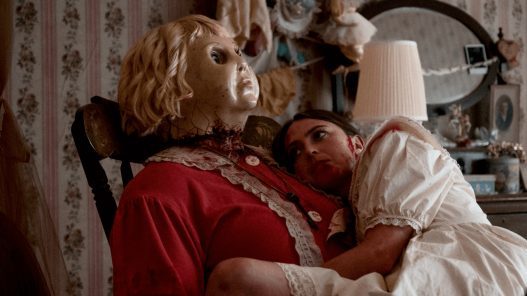

Dolly is one of those horror films that doesn’t try to hide what it is. From early on it settles into a formula that most horror fans will recognise immediately. You have the classic setup of a silent, disturbed individual with the mind of a child, mixed with violent impulses, near supernatural strength, and that almost mythical slasher-movie ability to appear wherever their victim least expects them. It is the kind of character horror has returned to again and again over the years.
There is also that familiar cinematic logic that fans of the genre will instantly recognise. The killer moves slowly, almost dragging their feet as they walk, yet somehow always manages to appear either in front of or directly behind the person trying to escape. I always jokingly think of it as the killer’s “teleportation skill.” It makes absolutely no logical sense, but it is such a well known part of horror storytelling that it almost becomes part of the fun. You expect it, and the film leans right into it.
Because the structure is so recognisable, the story itself is very easy to follow. The film does not attempt to bury the audience in complicated plot points or layered mythology. Instead it focuses on the core ingredients that have made this kind of horror work for decades. Tension, pursuit, fear, and the constant sense that danger could appear at any moment. Sometimes that simplicity can actually work in a film’s favour, and Dolly seems comfortable embracing that.
Where the film really earns its place within the genre is through the visual horror. This is where it genuinely got under my skin. The film reminded me of the older days of horror where the camera did not cut away from the brutality, particularly those uncomfortable close up mutilation scenes that made audiences squirm. The difference here is that it is executed with modern filmmaking techniques and effects, which makes everything feel far more realistic.
The violence in the film is not just there for spectacle either. Each moment is staged in a way that makes the audience feel it. The sound design, the close framing, and the commitment to showing the aftermath of the attacks all contribute to that sense of discomfort. Watching it in a cinema made that even more noticeable. Every particularly brutal moment triggered an immediate reaction from the audience, with people gasping, wincing, and making those instinctive sounds of discomfort that only really happen when a horror scene lands properly.
That shared reaction in the room almost became part of the experience. You could feel the tension building with each scene, as people began anticipating just how far the film might go next. In many ways that is exactly what this kind of horror aims to achieve.
Overall, Dolly does not break new ground in terms of story. It follows a well known horror formula and never really tries to disguise that. But sometimes familiarity works in the genre’s favour. What it may lack in originality, it makes up for with intense visual horror and a willingness to push its violent moments far enough to genuinely unsettle its audience. For fans of brutal, old school style horror, this is the kind of film that delivers exactly what it promises.

I grew up in the Blockbuster Video days, when picking a film meant judging the cover and hoping for the best. I’m not a critic by trade — I just call it how I see it, whether a film smashes it or falls flat on its face.